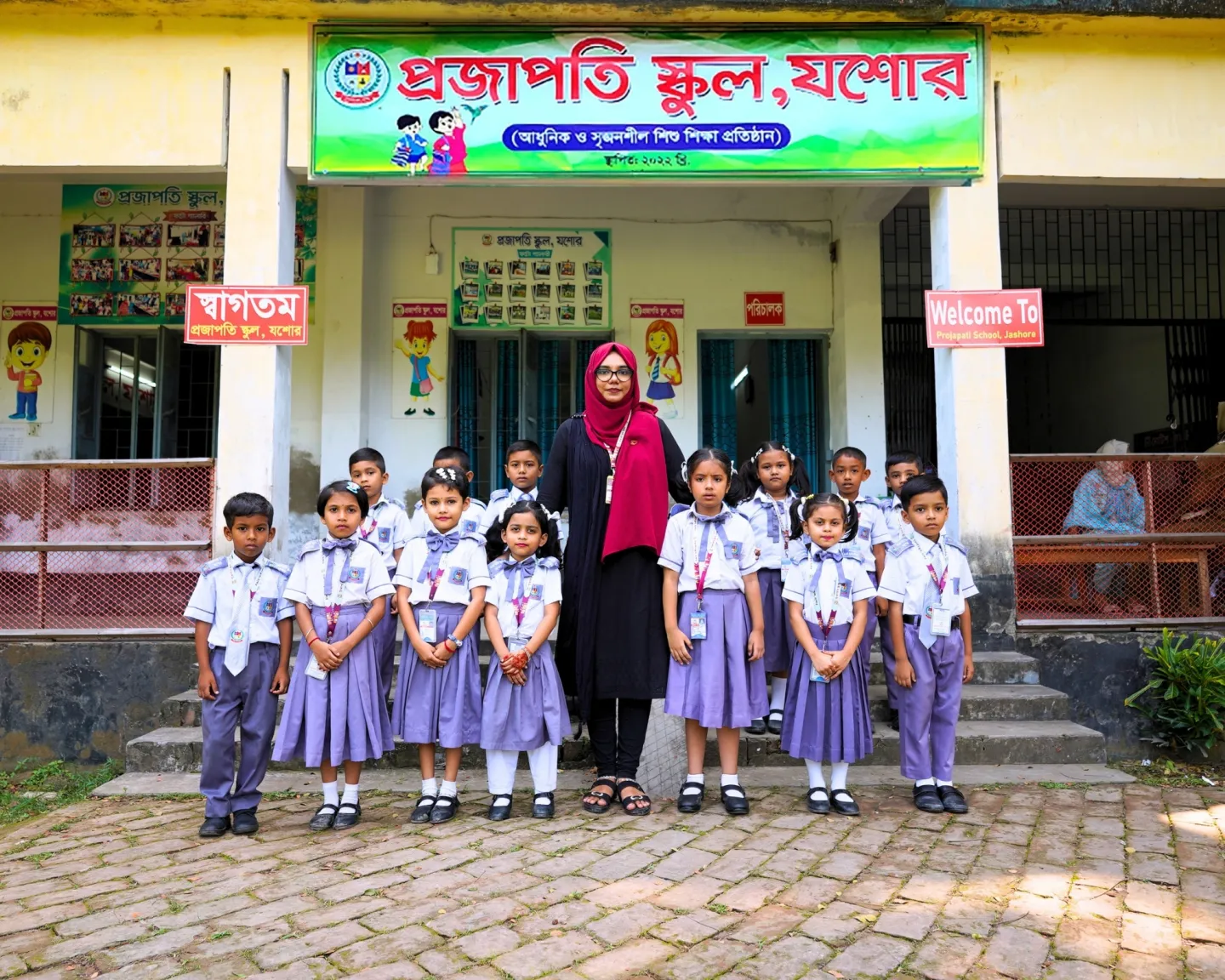
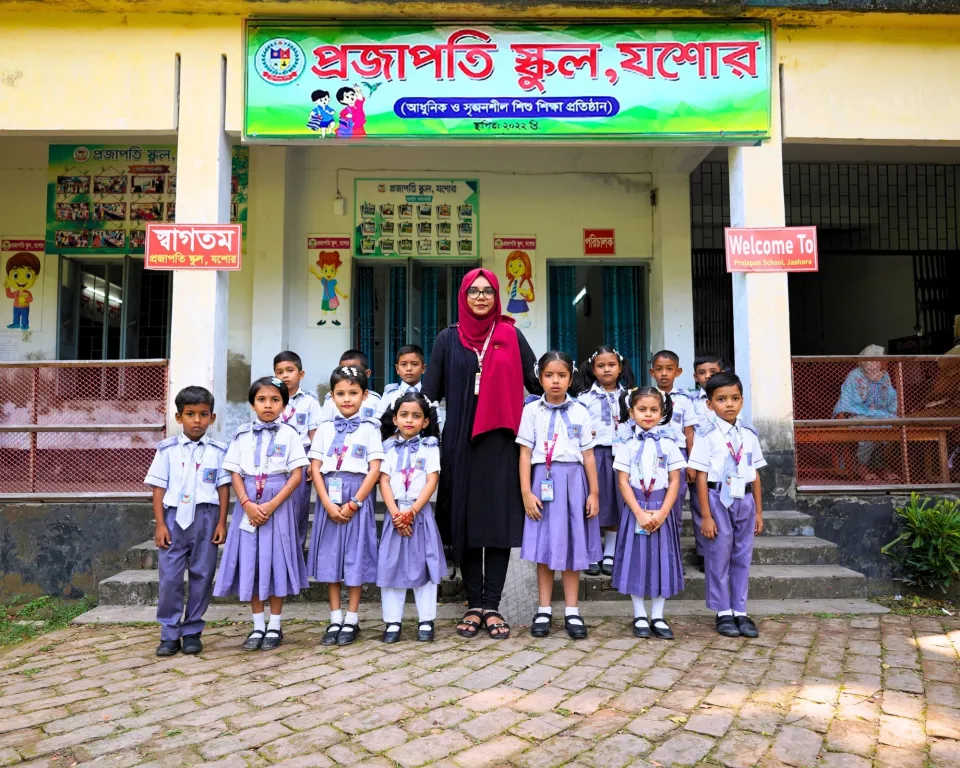
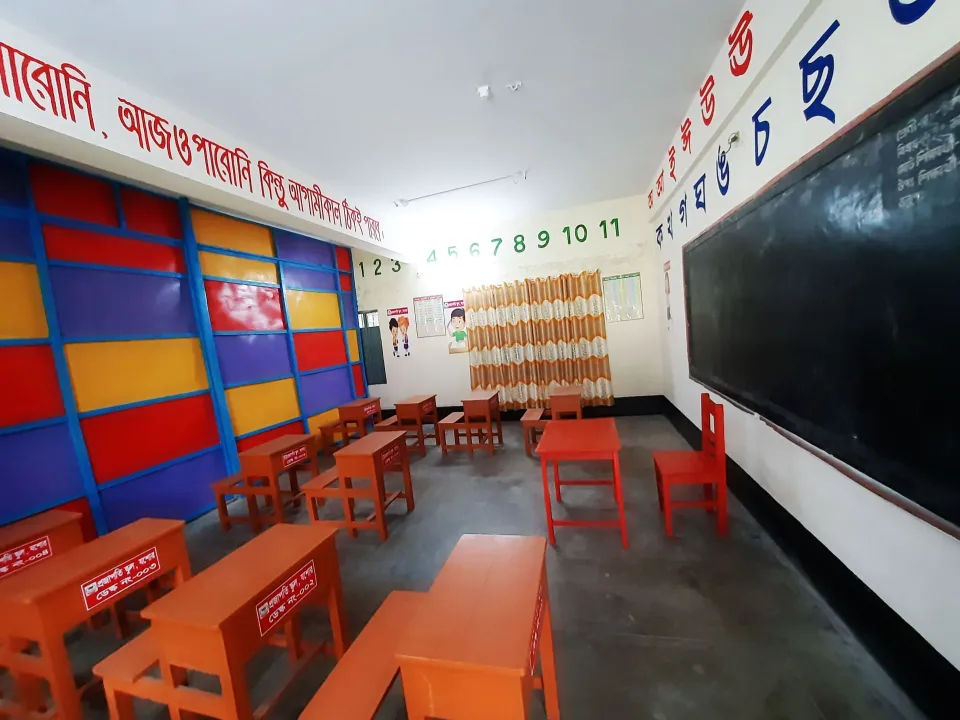
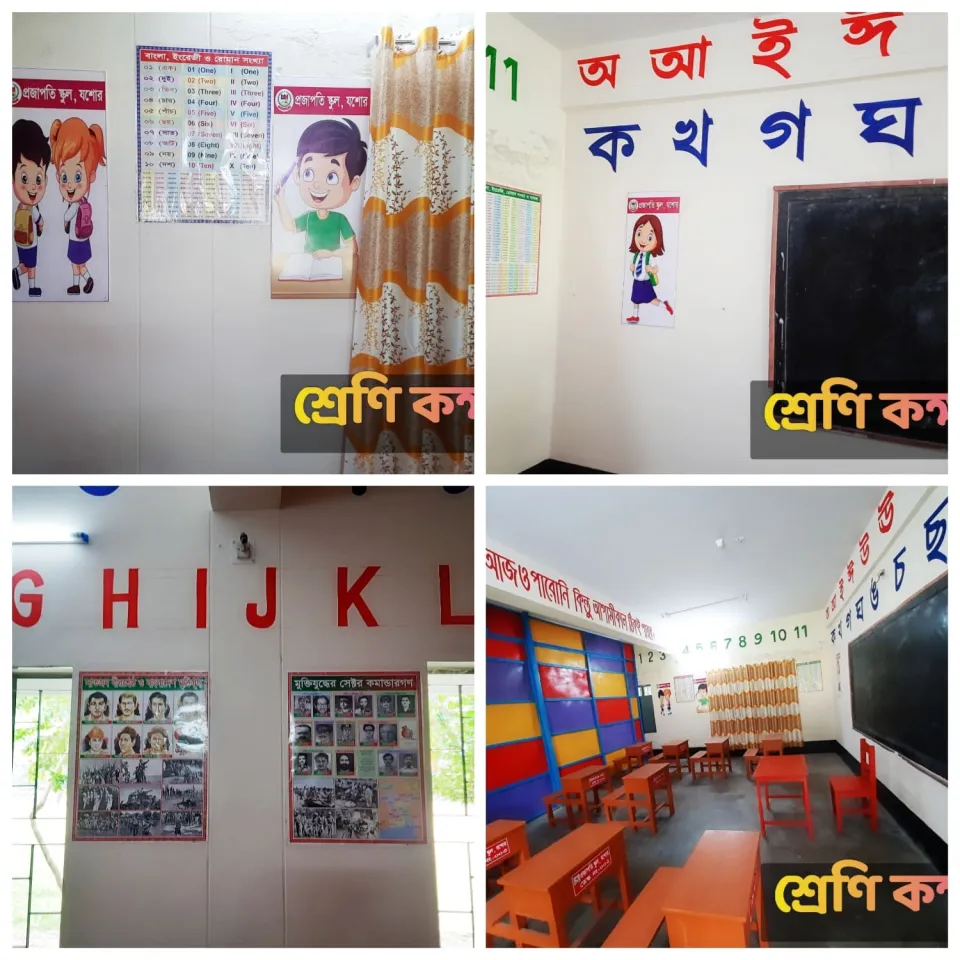
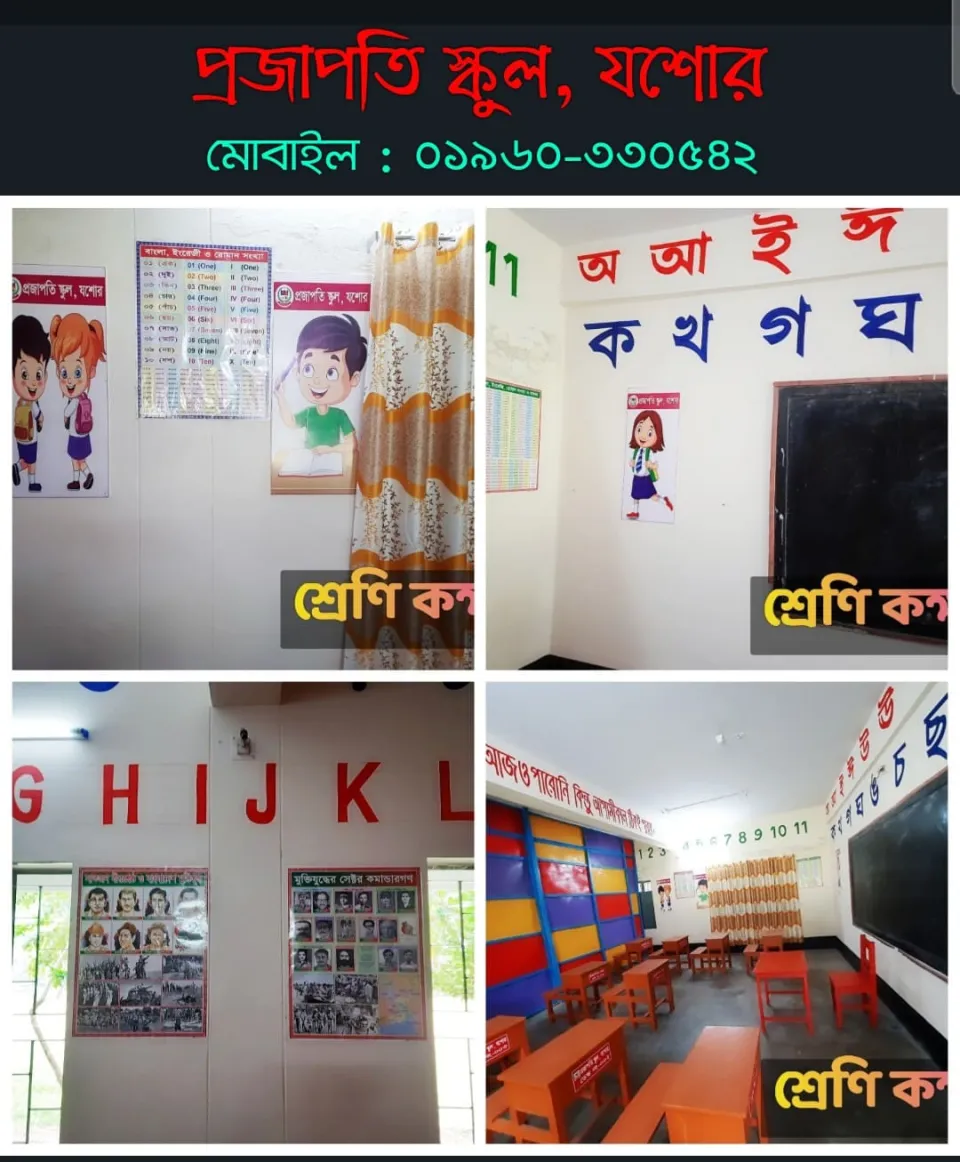
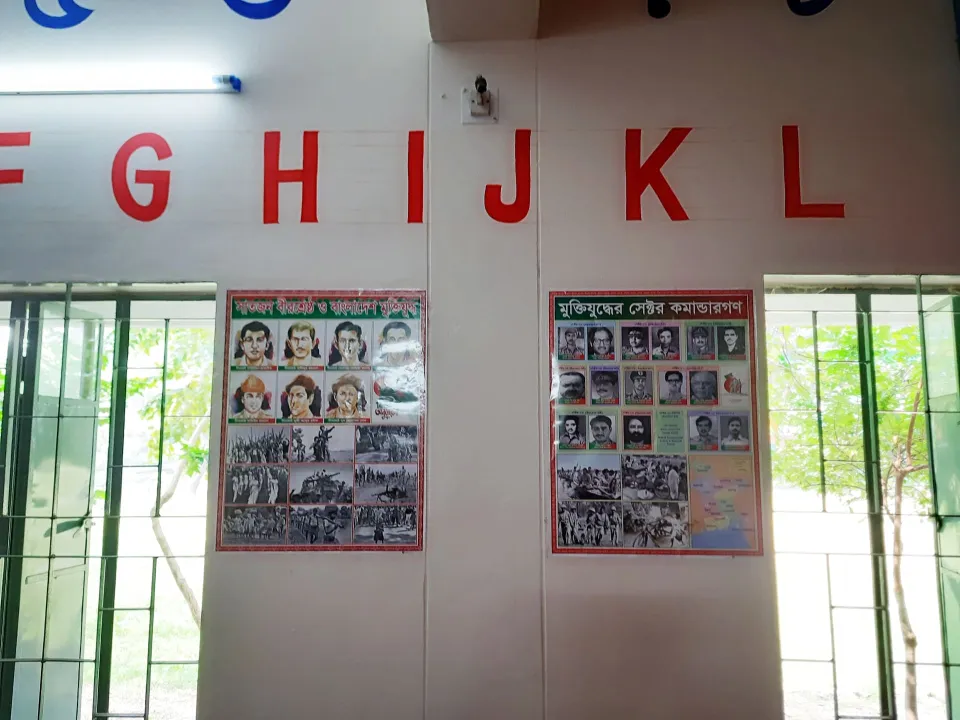
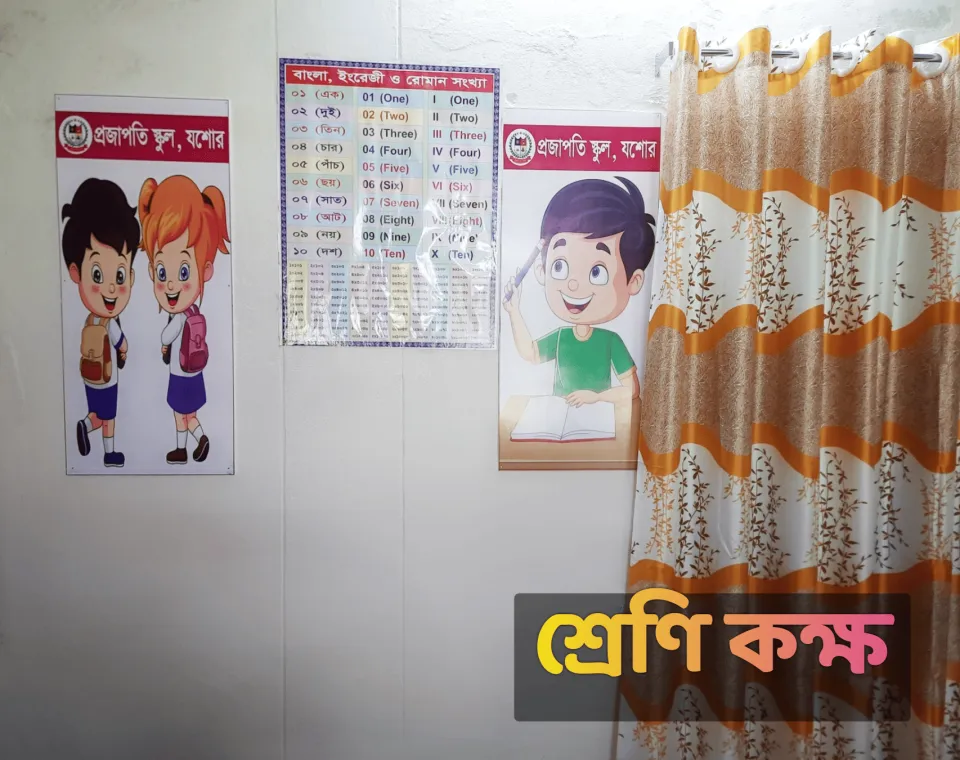
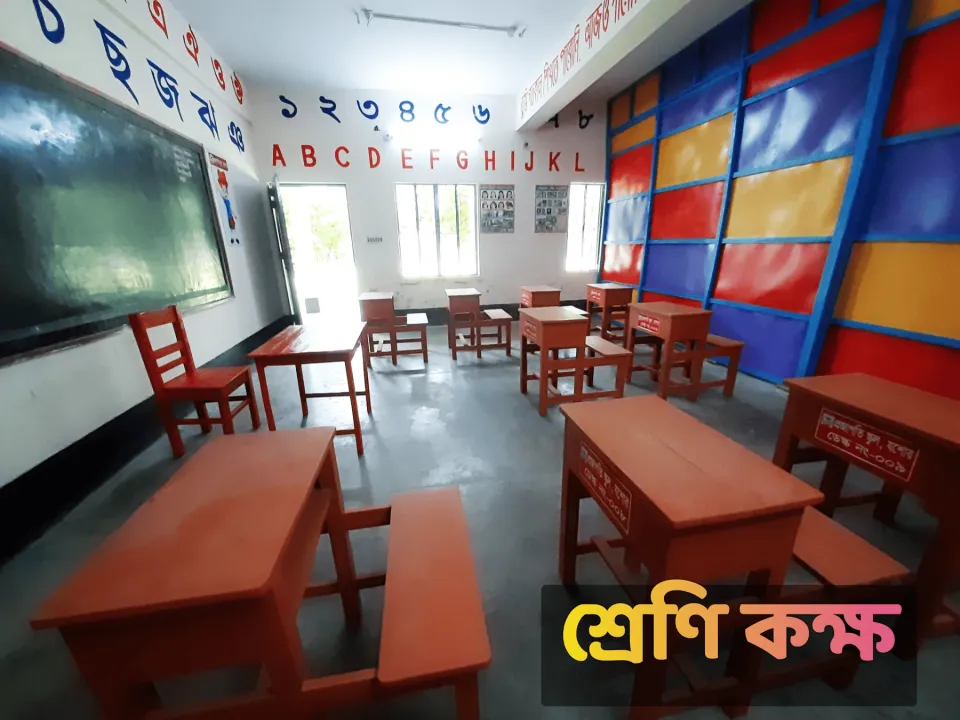
Teaching methods for nursery students are designed to be joyful, child-friendly, and participatory, taking into account their age and stage of mental development. At this stage, special emphasis is placed on fostering an interest in learning, stimulating curiosity, nurturing creativity, and teaching social behaviors. To make lessons simple, engaging, and effective, teachers utilize rhymes, songs, storytelling, visual aids, games, role-playing, drawing, and various educational materials. Concepts such as the Bengali alphabet, English letters, numbers, colors, shapes, and familiar aspects of daily life are taught through real-life examples and hands-on activities. Additionally, active participation is ensured through question-and-answer sessions, group activities, and enjoyable game-based learning.
A safe, clean, orderly, and cheerful classroom environment is maintained, allowing every child to express their thoughts freely. Teachers guide the children with affection, patience, and sincerity, paying attention to each child's individual capabilities, interests, and pace of learning. Through classroom activities, children develop habits of mutual cooperation, friendship, discipline, etiquette, sharing, and teamwork. They are also taught essential life skills, such as completing tasks independently, organizing their belongings, maintaining personal hygiene, and practicing appropriate daily behaviors.
To enrich the classroom experience, students are encouraged to learn joyfully, and they receive praise and encouragement for even small achievements. Children who face learning difficulties receive special care and necessary support. Progress is assessed through regular observation, oral questioning, classroom assignments, and various creative activities. Ultimately, the primary goal of the nursery teaching approach is to transform the school into a cherished place of joy, discovery, and new experiences, enabling students to become confident, creative, and socially adept individuals prepared for their future academic journey.